Random

Voice Box for OS X

Now _this_ is brill. Voice Box is a fully-scriptable speach app for OS X. It sports aiff file output; listen-as-you-type; control over voice, pitch, and rate; and can even grab RSS feeds off the Net and read them to you in the voice of your choice. I see great applicability to Home Web Radio, interspersing tunes with up-to-the-minute news and weblog feeds.[via cory] [raelity bytes]

I downloaded the demo and it works great... The audioblog ideas are really very interesting. Lots of possibilities.... The link below is to an mp3 of the application reading part of my RSS feed... The demo only allows for a 9 second recording...
Lauer RSS Feed

Weblogs in Education Article...

techLEARNING.com | Technology & Learning - The Resource for Education Technology Leaders Educators have also been using the Web to publish course descriptions and syllabi, while building professional development communities dedicated to sharing best practices.Publishing student writing, however, has yet to gain widespread adoption in middle and high school English classes...

This is a great article explaining the background of weblogs, current uses in education, and more importantly potential uses by teachers and students. [by way of...weblogged News]

Recommended Reading from Adrian Holovaty

Holovaty.com Adrian Holovaty writes a weblog that focuses on the technical aspects of news/information Web sites. He always points to something interesting. Today I found a link to a presentation given by Marc Rettig called Design For Small Screens presentation Am looking into this because we plan to get a set of Wi-Fi enabled PDAs for use at Buckman Elementary... Some sites, such as Wired, have redesigned their sites utilizing CSS that displays well on computers and PDAs. As the prices of these devices fall, and as their feature sets grow, I see PDAs and other such devices as having a greater role in the school environment.

H20...

H2O - About H2O Dave Winer points to an interesting discussion project at Harvard.... The H2O project is building an interlocking collection of communities based on the free creation and exchange of ideas. The recent development of the Internet has been overwhelmingly driven by commercial interests. Commercial websites must ultimately focus on making money. The founding premise of the H2O project is that the university world has something to add to the growth of the Internet that the commercial world cannot contribute. H2O aims to apply Internet technologies to the underlying aims of the academy -- the free creation and exchange of ideas and the communities formed around those ideas -- both within and beyond the confines of the traditional university setting. This site is a public host for kernel of H2O functionality -- anyone is welcome to use the services on this site, including hosting his own project. In addition, we have published all of the H2O code as free software under the GPL.

BuddySpace...

Jon Udell's Radio

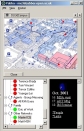
Now that the notion of presence is beginning to infuse our electronic communication, an inevitable next question is: presence where? Marc Eisenstadt, chief scientist at the Knowledge Media Institute of the Open University in the UK, wrote to show me a Jabber-based system called BuddySpace that locates presence indicators on maps. In the map shown here, Marc (top row, third photo from right) is present in the office, but idle. Martin Dzbor (bottom row, far right), KMI's

This looks very interesting. I like the example of coming into an office and seeing who is "in."